

Badia: The Spiritual and Natural Heart of Alta Badia
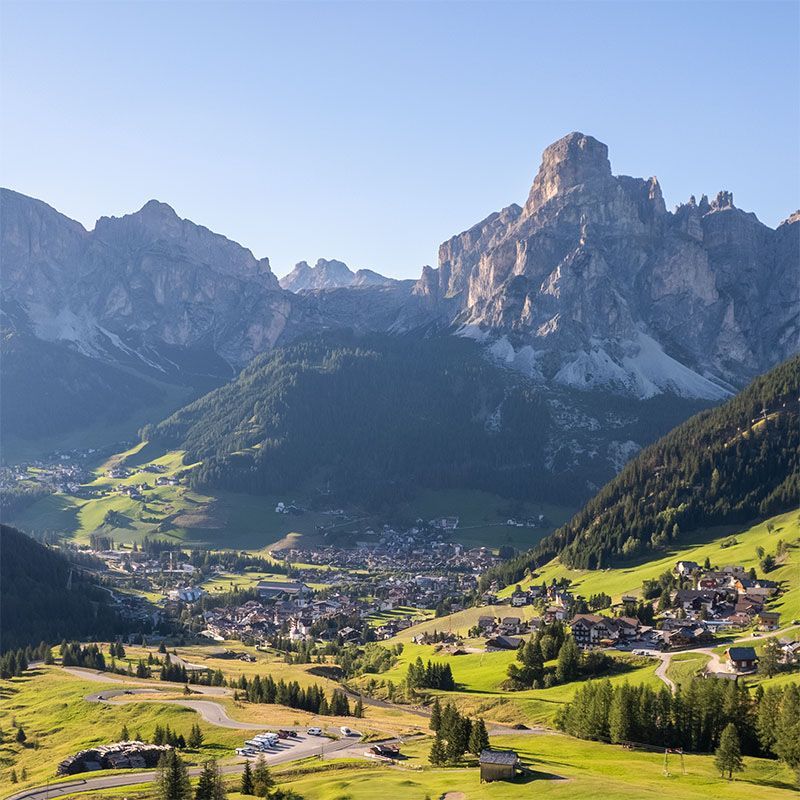
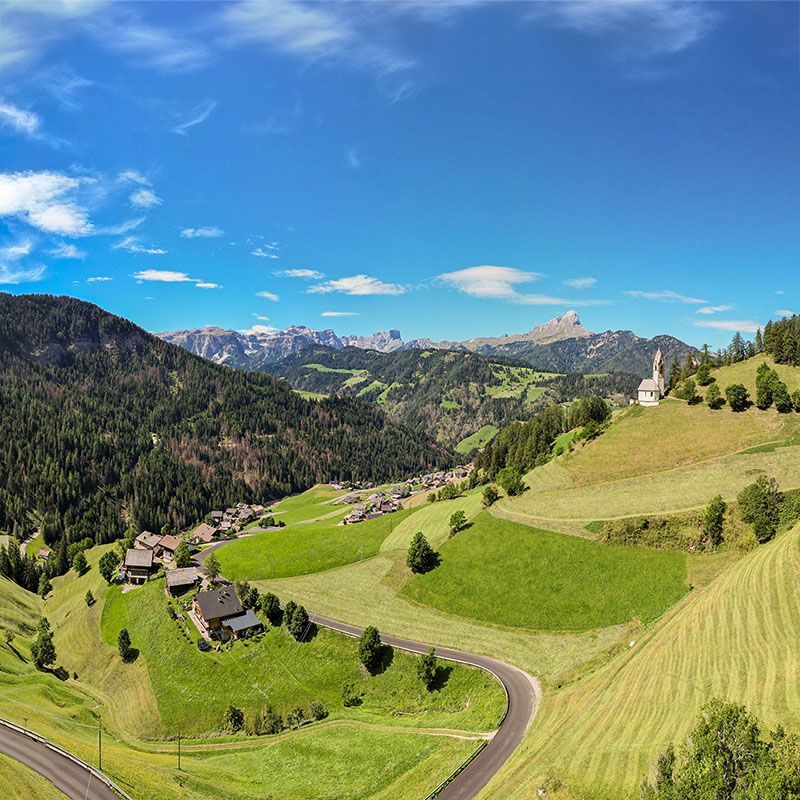
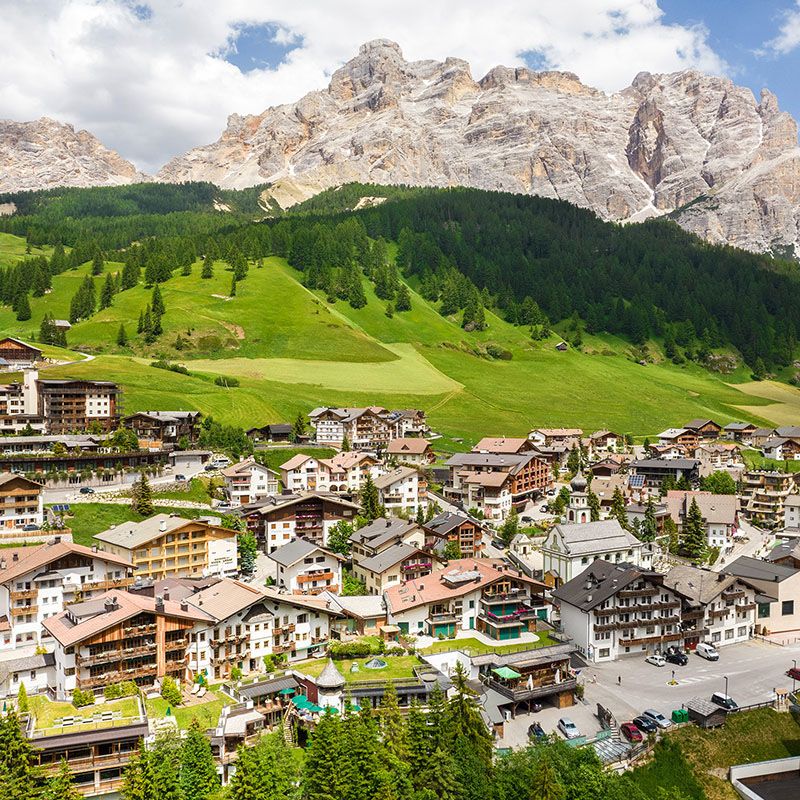
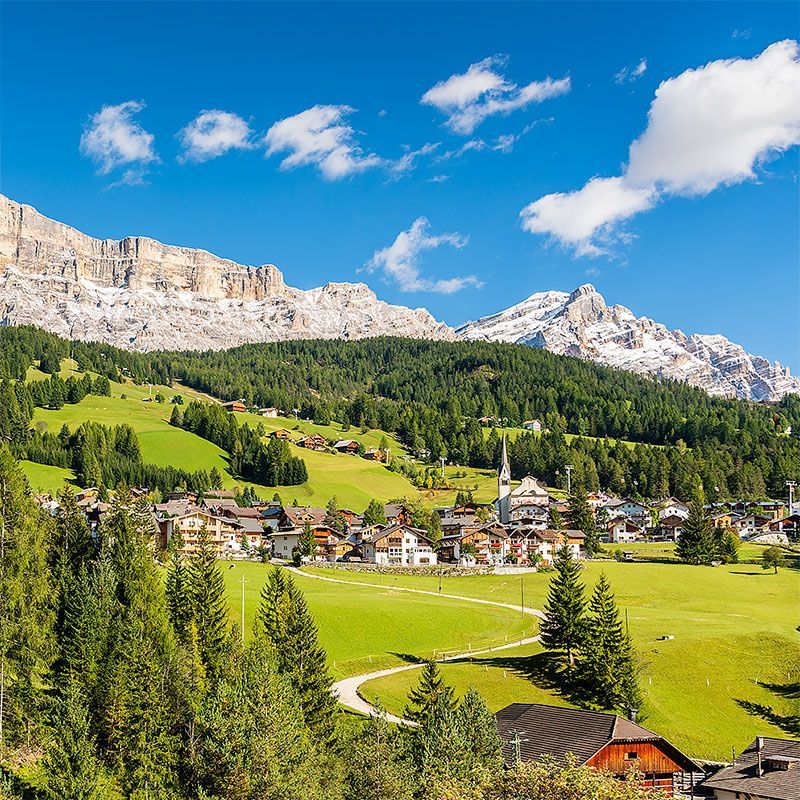
Badia is the main municipality of Alta Badia, nestled at an altitude of 1324 meters above sea level, at the foot of the imposing Sasso Santa Croce. Surrounded by an alpine landscape that exudes authenticity, it is the perfect destination both in summer, for hiking and relaxation in nature, and in winter, for snow sports.
The municipal area consists of two charming hamlets, Pedraces and San Leonardo, each with its own unique and fascinating character.
Pedraces and Lake Sompunt: Tranquility, Wildlife, and Noble History
Above the hamlet of Pedraces, at an altitude of 1460 meters above sea level, lies Lake Sompunt, a true alpine mirror of water that transforms in winter into a romantic ice-skating rink. Ideal for families is also the Paraciora Deer Park, which stretches over 7 hectares of meadows and woods. A simple 2 km path runs along the park, allowing visitors to get close to deer and roe deer.
Don’t miss the Sompunt Residence, the ancient home of the Mayrhofer zu Koburg nobles (1700–1859), decorated with 16th-century frescoes and featuring gothic beams and columns in the cellar: an architectural gem in perfect harmony with the surrounding landscape.
San Leonardo: Faith, Baroque Art, and Devotion
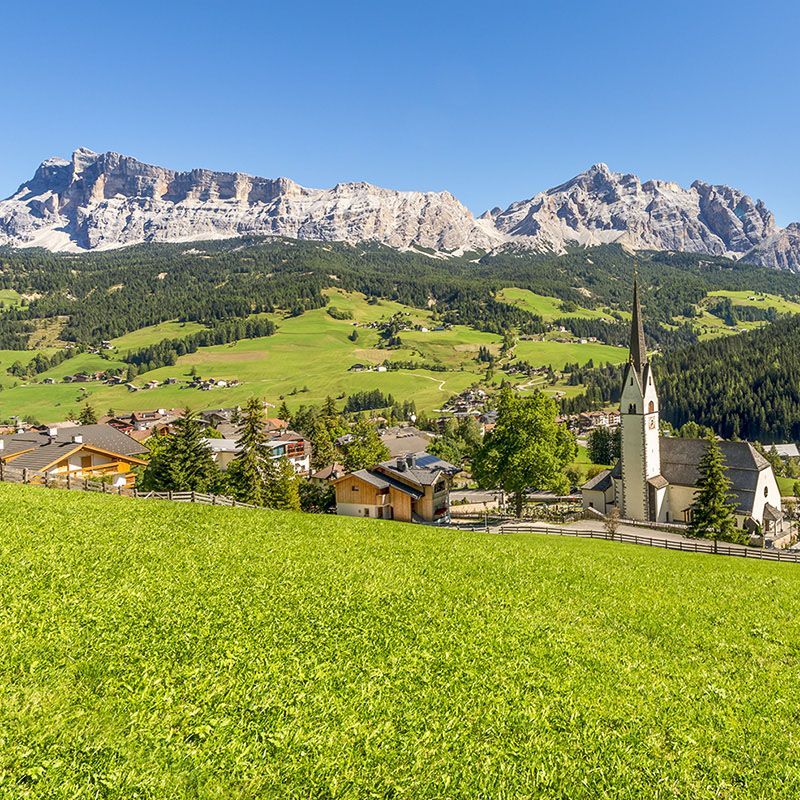
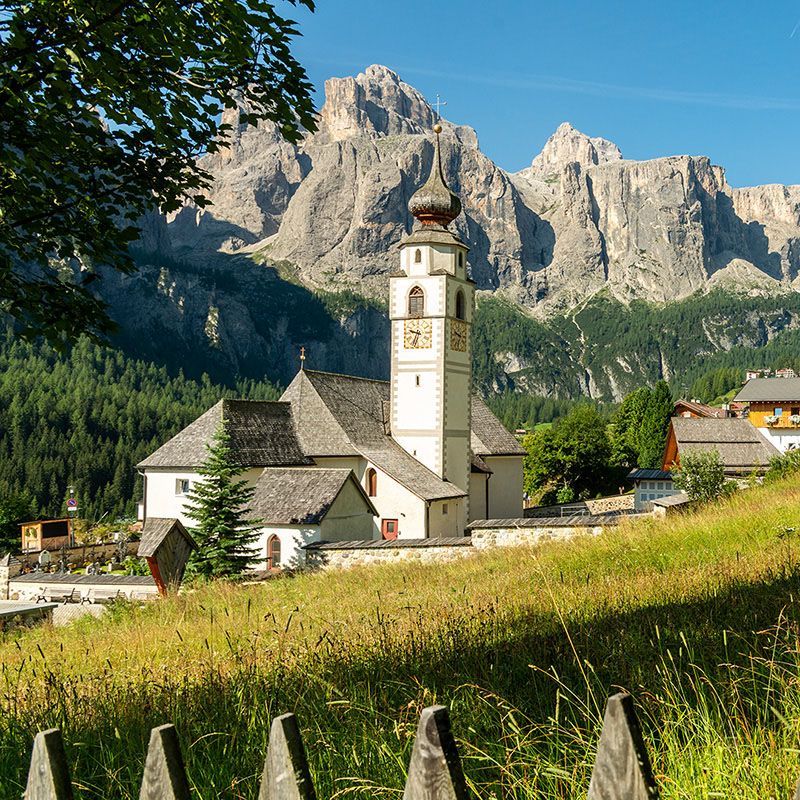
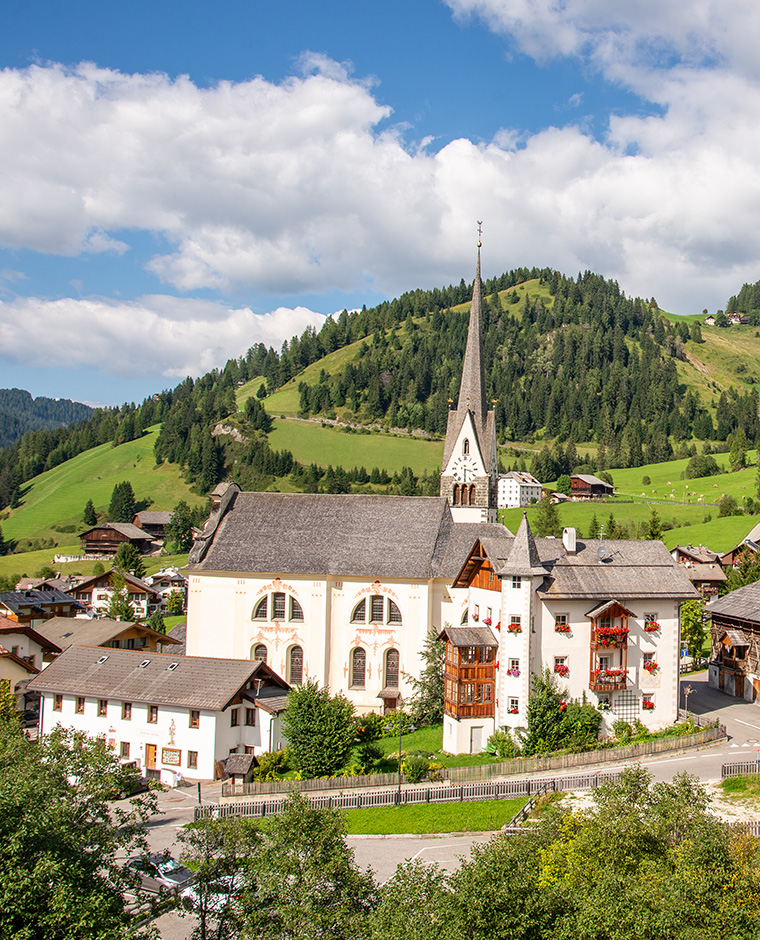
The hamlet of San Leonardo is dominated by the picturesque Santuario di Santa Croce, which can also be reached on foot with a pleasant hike. However, the artistic heart of the village is the Parish Church of San Leonardo, considered one of the most beautiful in Alto Adige: it was built in Baroque style between 1776 and 1778 based on the design of Franz Singer of Götzens, replacing a previous Gothic church.
But San Leonardo is also a place of pilgrimage: it is the birthplace of Saint Joseph Freinademetz, the first saint from South Tyrol, a missionary in China in the 19th century. Born in 1852 in the small locality of Oies, he left at a young age to bring the Gospel to Asia, enduring persecution and diseases until his death in 1908. Canonized in 2003 by Pope John Paul II, he is now venerated worldwide.
His birthplace is open to visitors and houses letters, personal items, and testimonies from his extraordinary life: a stop that combines spirituality, culture, and memory.