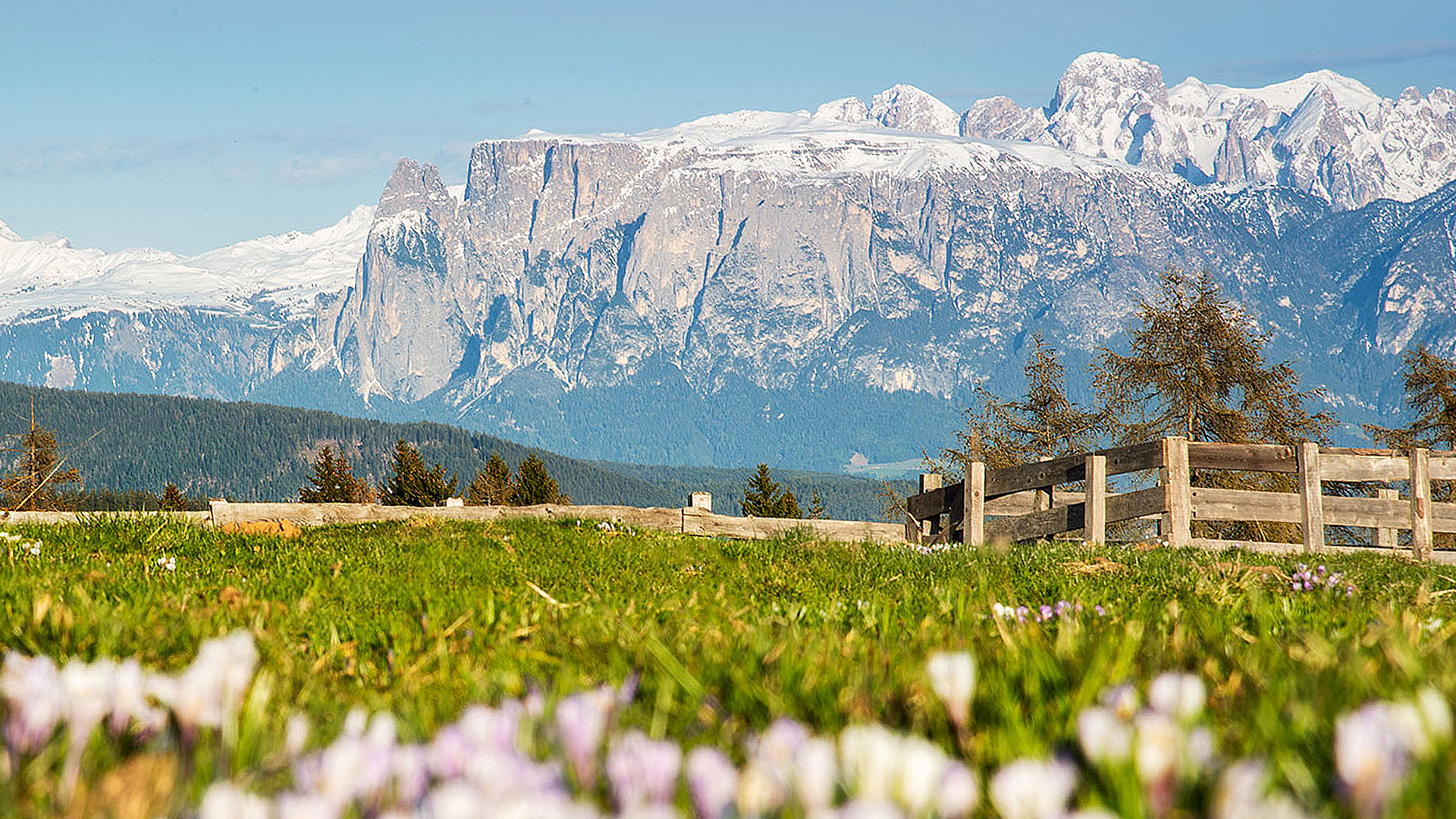


The Sciliar: Symbol of South Tyrol
The Sciliar massif, considered one of the most recognizable symbols of South Tyrol, is a spectacular rock formation of the Dolomites, located between the Isarco Valley and Trentino. It is part of the Sciliar-Catinaccio Nature Park and is clearly visible even from the city of Bolzano, thanks to its distinctive shape — a vast rocky plateau surrounded by imposing peaks.
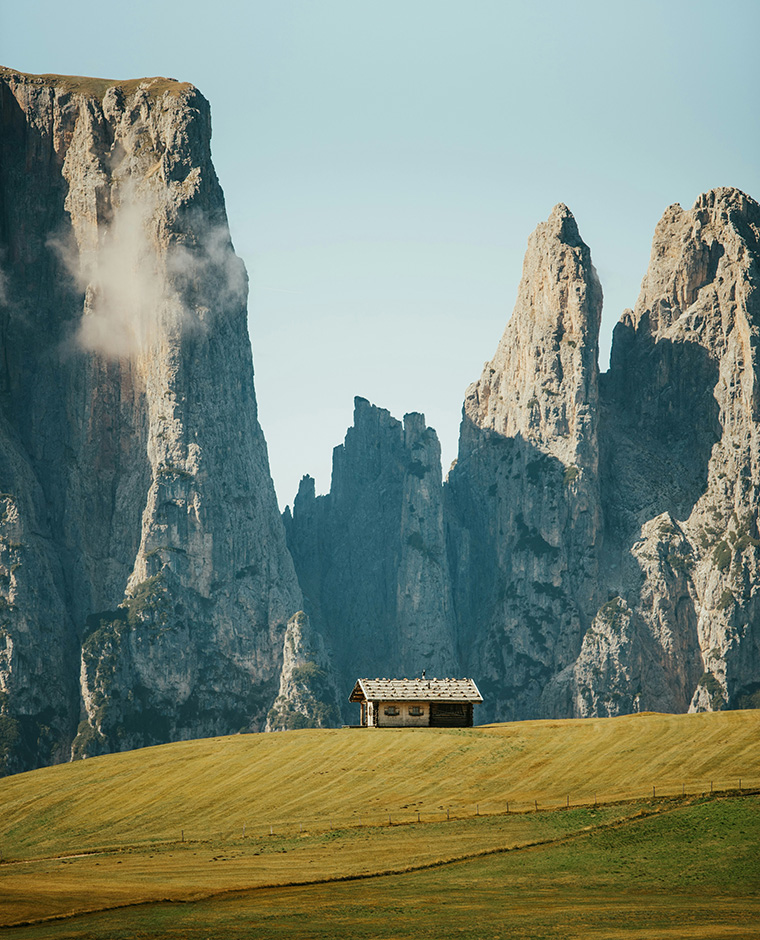
The Alpe di Siusi: The largest alpine pasture in Europe
The Sciliar rises majestically above the Alpe di Siusi, the largest high-altitude plateau in Europe, accessible both from the Alpe and from the Val di Tires. This vast upland, bordered by the Denti di Terrarossa to the south and Mount Petz to the west, is one of the most spectacular places in the Dolomites.
Since the Bronze Age, the Sciliar has been frequented by humans — both as alpine pastureland and as a place of worship — testifying to its historical and cultural importance over the centuries. Archaeologists have discovered numerous votive artifacts on its summit, including fragments of pottery, tools, and animal remains, suggesting the performance of ritual offerings.
It is believed that the ancient peoples of these valleys considered the Sciliar a sacred place, perhaps linked to alpine deities or fertility and nature cults. These rites, handed down over time, may have given rise to the legends of the Witches of the Sciliar, reinforcing the mountain’s bond with popular mysticism.
Legends and mysteries of the Sciliar
The Sciliar massif is wrapped in numerous legends, the most famous of which tells of the Witches of the Sciliar. It is said that during stormy nights, these witches gathered on the plateau to unleash lightning and thunder, dancing around fires and performing magical rituals.
This tradition is so deeply rooted that today the name “Schlernhexen” (Witches of the Sciliar) is used in various cultural and sporting contexts throughout South Tyrol — from local teams to folklore groups.
Peaks to conquer
Among the main peaks of the Sciliar, the highest is Mount Petz, reaching 2,563 m a.s.l., while the most iconic is undoubtedly Mount Santner Peak, which at 2,414 m dominates the mountain.
This spire is named after the mountaineer Johann Santner, who in 1880 was the first to climb it, leaving his mark on mountaineering history. Next to it stands Mount Euringer Peak (2,394 m), which together with Santner Peak creates the Sciliar’s unmistakable silhouette.
Hiking and trekking on the Sciliar
One of the most beautiful routes to reach the Sciliar is the trail starting from Compaccio (Alpe di Siusi), passing by Malga Saltner and leading up to the Bolzano Hut on Mount Petz.
- Distance: about 12 km
- Elevation gain: 900 m
- Duration: about 4 hours
From the Bolzano Hut, experienced hikers can continue toward the Denti di Terrarossa, from where they can enjoy a breathtaking panorama of the surrounding Dolomites.
An icon of South Tyrol between nature and history
Whether you wish to climb its peaks, admire its breathtaking sunsets, or immerse yourself in its ancient legends, the Sciliar is an unmissable destination. Its unmistakable silhouette and rich history make it one of the most fascinating places in the Dolomites.