

Castle Thurn: Ancient ruins of history, mystery, and nature
Nestled in a dense forest on the right side of the Casies stream, Castle Thurn once stood majestically on a hill that today preserves only its evocative ruins. Facing the better-known Castle Welsperg, this forgotten stronghold tells stories of centuries past — of noble rivalries, dynastic struggles, and tragic events that sealed its fate.
A medieval fortress between two noble families
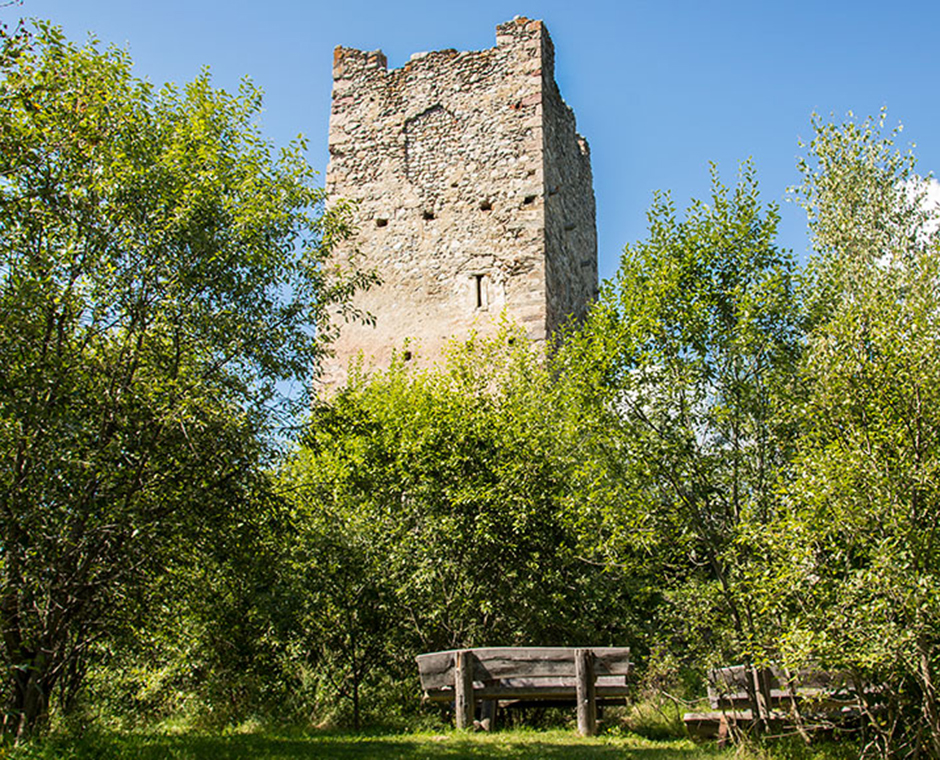
Built in the 13th century by the von Welsperg lords, Castle Thurn likely rose on an ancient prehistoric settlement, as suggested by its elevated position and the shape of the terrain. Initially modest in size but already featuring a main tower, the castle was later expanded until it stretched 75 meters across the entire top of the hill.
In 1288, the castle passed to the Füllein family, relatives of the Welspergs. It was during this period that the castle was named “Thurn”. After the death of the last Füllein, Jodock, in 1359, the castle returned to the Welsperg family.
Decline and ruin
After centuries of proud existence, from the 17th century onward Castle Thurn was neglected and left to decay. On the night of May 15, 1765, a devastating fire — possibly arson — completely destroyed the fortress. The nearby Castle Welsperg, also damaged, was at least partially restored, but Castle Thurn was abandoned forever. Only the adjacent farmhouse was rebuilt.
A legacy to contemplate
Today, the remains of Castle Thurn lie in the quiet embrace of the forest, reachable only by those who love walking among forgotten ruins and traces of history. The property still belongs to the noble Thun-Hohenstein-Welsperg family, direct descendants of the ancient lords.
Walking among the ruins of Castle Thurn feels like turning the pages of a lost book, where every stone tells of a distant era and every glimpse over the Casies Valley offers an enchanting view into a history that still lives on — in the heart of nature.