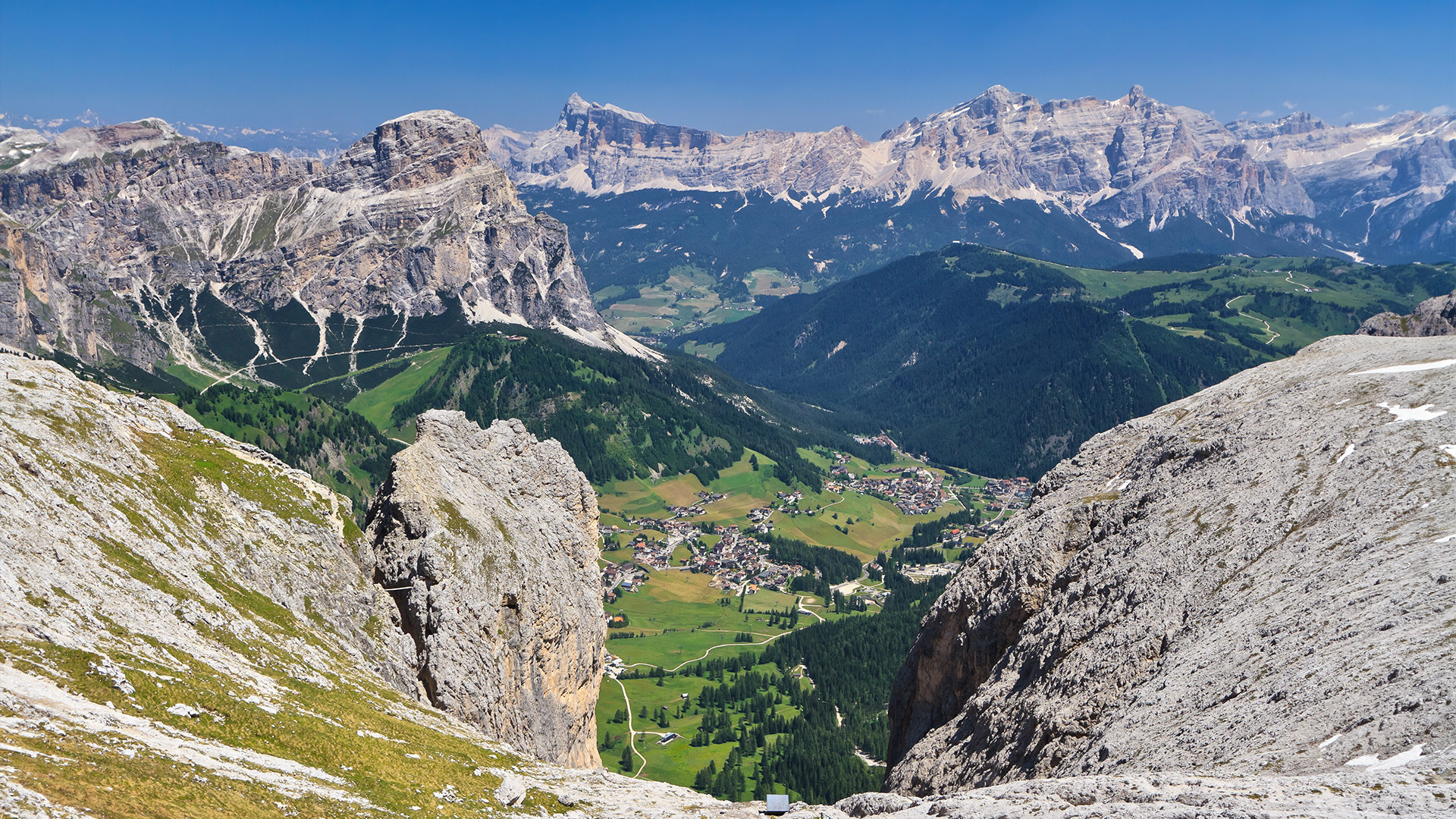

Ferrata Tridentina al Pisciadù – Complete Guide
The Ferrata Tridentina al Pisciadù is one of the most famous and frequented via ferratas in the Dolomites, renowned for its diverse scenery, the spectacular Pisciadù waterfall, and the breathtaking panoramas along the route. Ideal for experienced hikers, but also suitable for those with some via ferrata experience, the Tridentina offers the perfect mix of excitement and technical challenges.
- Total duration: 6 h
- Ascent: 3:30 h
- Descent: 2 h
- Length: 4.1 km
- Elevation gain (ascent): 635 meters
- Elevation gain (descent): 635 meters
- Maximum altitude: 2,587 meters
How to reach the access to the via ferrata
- From Val Gardena: Take the A22 and SS242 to Passo Gardena, then cross it and descend for six hairpin bends until reaching the marked parking lot on the right.
- From Alta Badia: From Corvara, head towards Passo Gardena for about 7 km until reaching the parking lot.
From the parking lot, a marked trail leads to the start of the via ferrata in about 10 minutes.
First part: The start of the route
The via ferrata begins with a 50-meter wall equipped with metal steps that facilitate climbing, even in humid conditions. The ascent is made easy thanks to natural handholds and iron steps. After this section, a gravel path follows a 600-meter wall, leading to the actual entrance of the via ferrata (at 2,070 meters), next to the Pisciadù waterfall.
Second part: Towards the Torre Exner
The route ascends the right side of the waterfall with more vertical and challenging sections, where the handholds become scarcer and progress requires more strength, especially in the arms. As you ascend, the silhouette of Torre Exner gets closer, and the view opens up to an extraordinary landscape.
Third part: Torre Exner and the suspension bridge
The most exciting section of the via ferrata begins here. After overcoming several vertical passages and a long metal ladder, you reach Torre Exner (2,494 meters). For those wanting an extra challenge, it’s possible to climb to the top of the tower, always in safety.
The cherry on top? The iconic 8-meter-long suspension bridge, connecting Torre Exner to the Mur del Pisciadù Occidentale. An unforgettable passage that provides pure adrenaline and incredible views.
Final part: Arrival at Rifugio Cavazza
After the suspension bridge, continue for about 20 minutes on a slightly uphill path that leads to Rifugio Franco Cavazza (2,585 meters), overlooking the picturesque Lago Pisciadù. From here, if you still have energy, you can reach Cima Pisciadù (2,985 meters) in about 2 hours and 30 minutes, round trip.
Descent: Returning through the Val Setus
The descent follows the Val Setus. From the refuge, follow trail no. 666, which descends steeply through equipped sections and gravel fields, with metal cables at the more slippery points. Until mid-summer, there may still be residual snowfields, so check before departure. The total descent takes about an hour until reaching the parking lot.
Useful tips and route notes:
- Preparation: The via ferrata is suitable for hikers in good physical condition with basic climbing experience.
- Crowding: It can be very busy on summer weekends; it’s better to start early or choose weekdays.
- Highlights:
- The first part is smooth and gradual, ideal for getting familiar with the route.
- The final sections are exposed and vertical, with the suspension bridge as the absolute highlight.
- Unique panoramas of the entire Sella Group and the surrounding Dolomites.
The Ferrata Tridentina is a timeless classic of Dolomite climbing: an exciting challenge that rewards every effort with spectacular views and unforgettable memories.