

Fanes-Senes-Braies Nature Park: A natural treasure between Val Badia and Val Pusteria
The Fanes-Senes-Braies Nature Park stretches across the eastern part of Val Badia and along Val Pusteria, covering the municipalities of Badia, Marebbe, Valdaora, Braies, and Dobbiaco. With an area of nearly 26,000 hectares, this park, established in 1980, is one of the most captivating in the Dolomites. Here, the landscapes alternate between imposing rock formations, vast alpine meadows, and picturesque bodies of water like the famous Lake Braies and the plateaus of Fanes, Senes, and Prato Piazza.
The landscape shaped by karst
The park’s formation is the result of intense karst phenomena, typical of limestone and dolomitic rocks. This natural process has given rise to caves, scoured fields, and underground lakes, creating breathtaking scenery.
Among the park's most distinctive features are the spectacular "cities of stones", vast expanses of shattered rock, and the famous Grotta delle Conturines, where the remains of the Ursus ladinicus, an ancient species of prehistoric bear, were found.
Vast plateaus between nature and legends
The plateaus of Fanes, Senes, and Prato Piazza represent the heart of the park. The Fanes Plateau, divided into Fanes Grande and Piccolo, is a place rich in alpine lakes such as Lake Limo and Lè Vert, with a panorama that feels like a natural amphitheater surrounded by Sasso di Santa Croce.
The Senes Plateau is characterized by vast meadows and pastures dotted with mountain huts, perfect for more relaxed hikes and enjoying good food in a peaceful setting.
Prato Piazza is a hiking paradise in every season, perfect for trekking and snowshoeing with views of the Dolomites—truly a gem for sports enthusiasts.
The park's fauna: From marmots to golden eagles
The extraordinary biodiversity of the Fanes-Senes-Braies Nature Park is home to numerous animal species. Marmots, chamois, and deer inhabit the alpine meadows, while foxes, martens, and wild cats move stealthily through the forests.
Birdwatching enthusiasts will have the opportunity to spot capercaillie, golden eagles, and the elusive Ural owl, a nocturnal raptor found in the densest forests.
In the higher-altitude meadows, mountain hares and the timid ermine are perfectly camouflaged against the snowy backdrop.
Between flowering meadows and steep rocks
The park’s environment hosts a large variety of plants and flowers typical of the Dolomites. Red firs, Swiss pines, and larches dominate the forest belt between 900 and 2000 meters above sea level, while mountain pine thrives on the steeper slopes.
In the alpine meadows during summer, arnica, wild orchids, and edelweiss bloom, while in the cracks of the most rugged rocks, rapunzel, saxifrage, and orange-coloured radicchio grow.
Enchanted lakes: Braies, Dobbiaco, and hidden gems
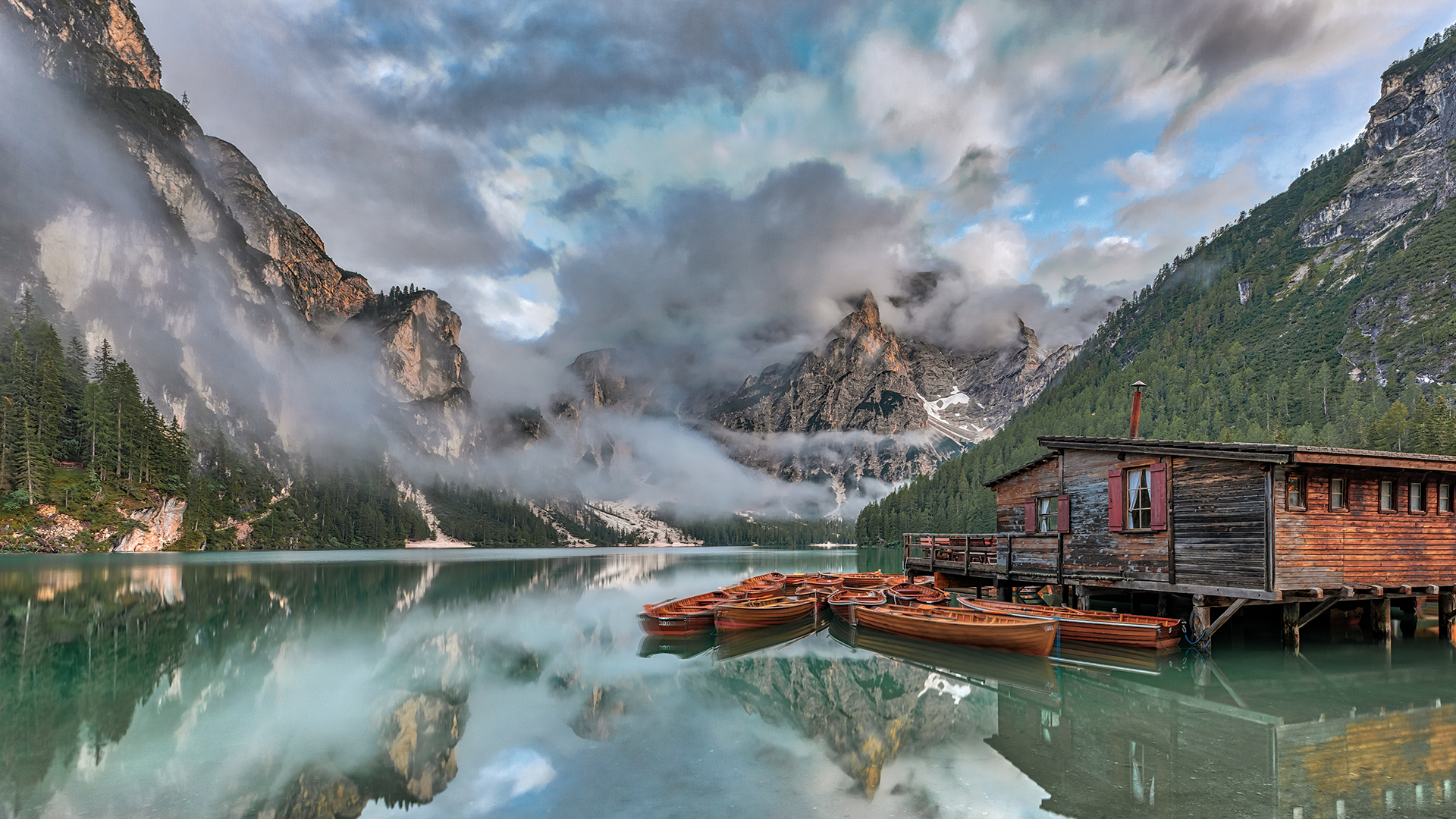
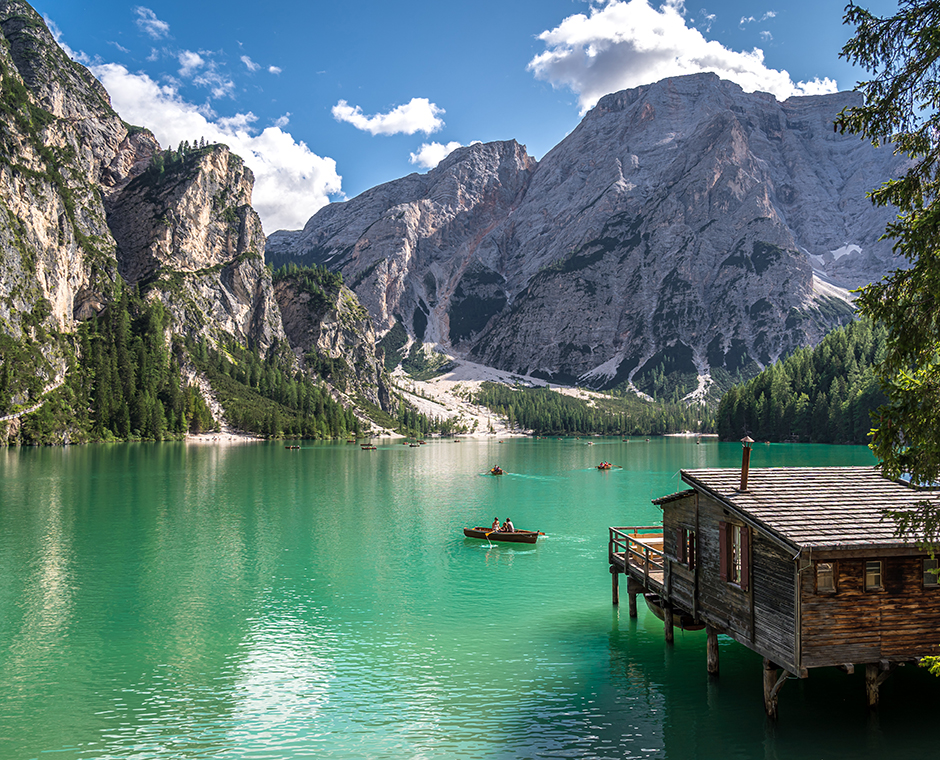
The Lake Braies, the most famous in South Tyrol, is one of the park's main attractions. Here, you can take an easy 3.6 km circular hike and admire its emerald waters reflecting the Dolomite peaks.
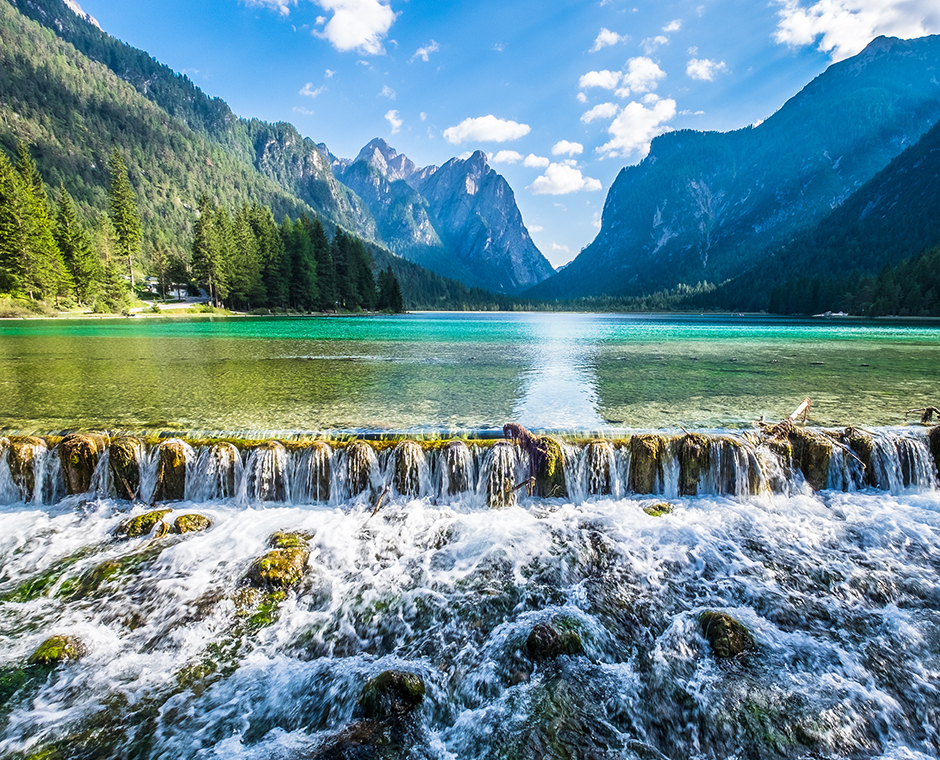
Another must-see waterbody is Lake Dobbiaco, perfect for walks through nature and birdwatching along its educational trail.
In addition to these, the park is dotted with smaller, lesser-known but equally fascinating alpine lakes, such as Lake Limo, Lake Rufiedo, and Lake Lè de Fojedora.
The San Vigilio Visitor Center
To deepen your understanding of the park, a visit to the San Vigilio di Marebbe Visitor Center is a must. Here, through interactive displays, fossils, terrariums with amphibians and reptiles, and an area dedicated to the Conturines bear, you can discover the park’s geology, fauna, and flora in an engaging and educational way.
The Fanes-Senes-Braies Nature Park is truly a pearl of the Dolomites, offering breathtaking views in every season. Whether exploring its plateaus, admiring its unique flora and fauna, or immersing yourself in the legends and history of these mountains, every visit provides an unforgettable experience. A place where nature expresses itself in its most authentic form, ready to welcome hikers, families, and mountain enthusiasts.
For more information, visit the official website of the Fanes-Senes-Braies Nature Park.