


Ötzi, the Mummy of Similaun: The Prehistoric Treasure of South Tyrol
On September 19, 1991, a shocking discovery rocked the archaeological world: the body of a man who lived around 3,300 BC was found in the Venosta Alps. Preserved by the climatic conditions of the Similaun Glacier, it represents one of the most significant findings in the field of anthropology and archaeology globally. Now exhibited at the South Tyrol Archaeological Museum in Bolzano, it has attracted millions of visitors for its extraordinary state of preservation.
The Discovery at 3,210 Meters Above Sea Level
Only 92 meters from the Austrian border, the couple Simon discovered Ötzi’s mummified body, partially emerging from the ice. Alongside the mummy, well-preserved clothing and equipment were found.
After the recovery, the body was initially transferred to Innsbruck, where the first radiocarbon tests established its age: approximately 5,300 years, making it the oldest wet mummy ever discovered. However, since the discovery site was located in Italian territory, Ötzi was transferred to South Tyrol, where it is now housed.
Studies revealed that at the time of death, Ötzi was about 46 years old, stood about 1.60 m tall, and had numerous tattoos on his body. His stomach contained remnants of his last meal, consisting of cereals, vegetables, and meat.
The Mystery of Death: The Arrow in the Shoulder
In 2001, an x-ray revealed the presence of an arrowhead lodged in the left shoulder, which had damaged an artery, causing a rapid loss of blood.
This discovery led to the theory of a possible chase that culminated in a close combat encounter, and eventually, Ötzi's death from the arrow wound. The wounds found on his body suggest he may have been attacked and killed by one or more individuals.
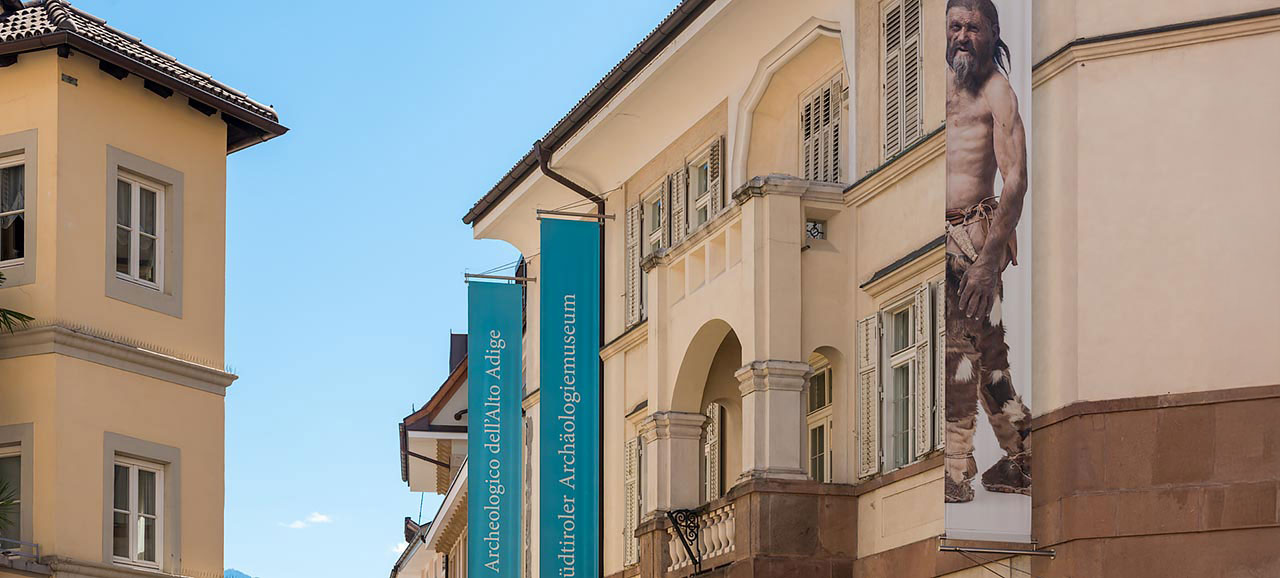
The South Tyrol Archaeological Museum: A Journey Through Time
The South Tyrol Archaeological Museum, located in Bolzano, offers an immersive experience retracing all stages of Ötzi's discovery:
Ground floor – Tells the media frenzy surrounding the discovery through newspapers, TV reports, and documentaries from 1991, in an interactive and dynamic path.
First floor – The heart of the exhibit: through a glass case, visitors can view the mummy, preserved in a special refrigerated chamber that recreates the conditions of the glacier. The same room also displays his clothing and equipment, essential elements for research and understanding the history of the Iceman.
Top floor – Focuses on life during the Copper Age, with 3D reconstructions, studies on diseases of the era, and hypotheses on Ötzi's role in prehistoric society.
Useful Information about the South Tyrol Archaeological Museum
Opening Hours:
Tuesday to Sunday: 10:00 - 18:00
Closed on Mondays (except public holidays)
Extra opening hours in July, August, and December
Official website and ticket prices: www.iceman.it