


South Tyrolean Museum of Folklore in Teodone: Among farmsteads, craftsmanship and traditions
Just a few steps from Brunico, the South Tyrolean Museum of Folklore in Teodone is one of the most beautiful open-air museums in Europe—a place where time seems to stand still. This provincial museum offers an authentic immersion into the rural life of South Tyrol, combining the museum park, which houses farmsteads and agricultural buildings from various valleys, with the Mair am Hof residence, home to precious collections of folk art and culture.
Here, visitors can stroll among vegetable gardens, barns and stables, discovering ancient crafts, everyday objects, and the ingenuity of rural populations who inhabited these lands over the centuries.
The museum park: Farmsteads and rural traditions
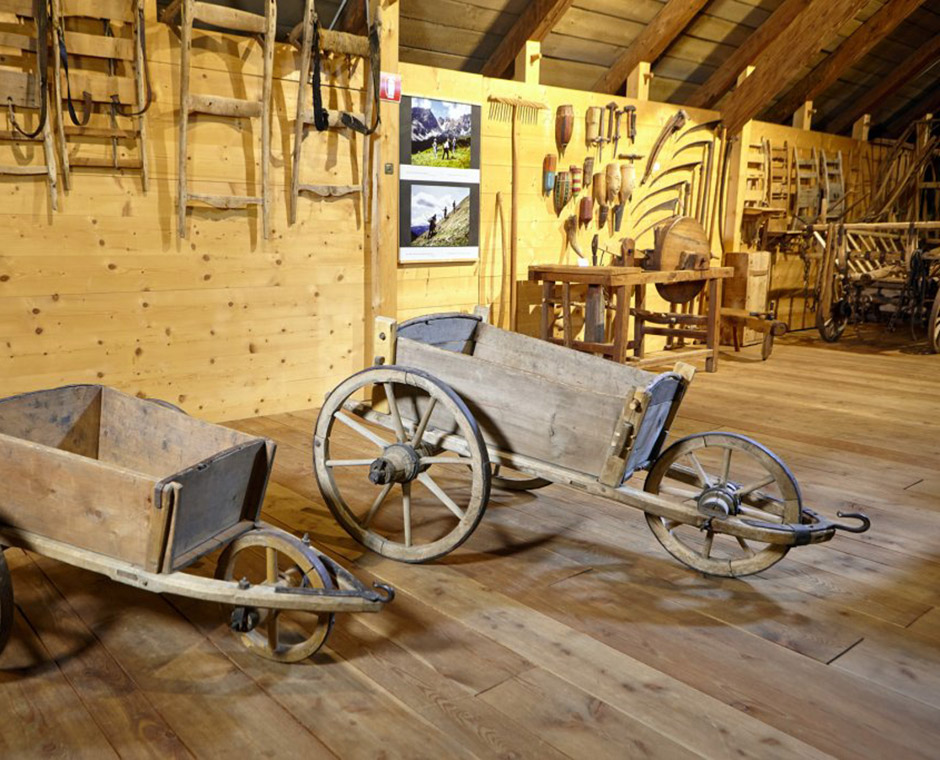
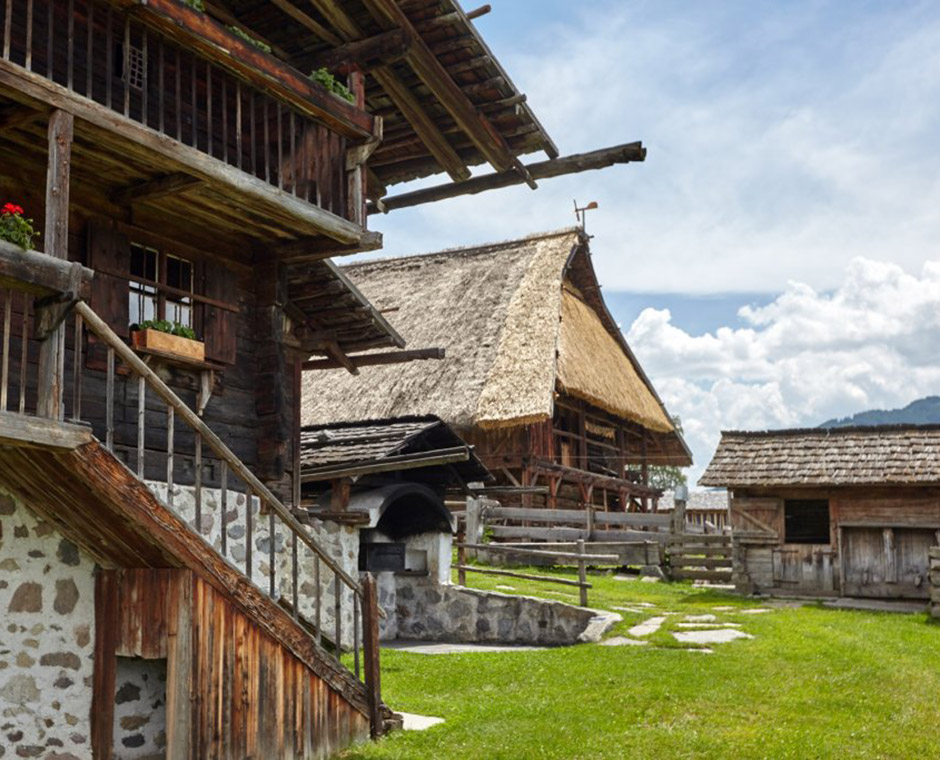
The museum park in Teodone offers an immersive experience among historic farmsteads, agricultural buildings, and artisan workshops, faithfully recreating life in South Tyrol’s valleys. Visitors can observe grazing animals, vegetable gardens, and medicinal herbs while learning about the traditional farming methods of the Alpine world.
Buildings not to miss
- The farmstead from Alta Valle Isarco (Rainhof or Ruaner): Originally from Ridanna, it was destroyed in 2002 and later rebuilt in the museum. Its richly decorated gable and authentic interior feature the stube, kitchen, and bedrooms, with stables located uphill.
- The dwelling house (Höfila): Once home to a large family in Selva dei Molini, it was dismantled in 1979 and rebuilt inside the museum in 1980.
- The dormitory (Kasten): In the 16th century, due to overcrowded homes, young people slept in secondary buildings like this one, originally from the Val Passiria.
- The barn (Unterpurstoanhof): A typical South Tyrolean three-story barn built in solid wood, moved here from Campo Tures in 1983.
- The “Hüttner” (small tenants): A small house with stable and barn, once inhabited by poor farmers with limited land, often unable to sustain large families.
- The straw-roofed barn (Spatauf): Dating back to the early 19th century, it is notable for its steep rye-straw roof, a construction technique typical of the past.
The Mair am Hof residence: The noble side of tradition
Built at the end of the 17th century by Anton Wenzl von Sternbach, the Mair am Hof residence represents the more refined side of South Tyrolean culture. Its painted facade with architectural motifs and ornate interiors host a vast collection from the South Tyrolean Museum of Folklore, including folk art, musical instruments, traditional costumes, and devotional objects.
What you’ll find inside the residence
- The sundial: The coats of arms of the residence’s founders are painted on the oriel next to the sundial, symbolizing the bond between nobility and tradition.
- The Baroque stube and the Rhaetian stube: Two unique rooms – the Baroque stube, once used by the servants, and the Rhaetian stube, from the Tschaggenhof farm in Val Passiria, dating back to the 11th century.
- The kitchen: Since the 16th century, even wooden houses began to feature masonry walls and vaulted ceilings in kitchens for greater fire safety.
- The cellar: Used to store food during the harsh Alpine winters.
- The chapel: It houses a precious marble altar by Cristoforo Benedetti, while the altar and ceiling frescoes are likely the work of Kaspar Waldmann.
- Votive paintings: Ancient expressions of faith. Grateful believers would donate paintings on wood or linen depicting religious scenes as offerings for blessings received.
- Original painted doors: The residence’s doors feature elegant decorations with castles, riverside landscapes, fishermen, and knights, illustrating scenes of daily and noble life.
- The noble rooms: Exhibit collections of refined objects that showcase the luxury and lifestyle of the aristocracy of the past.
A journey into the heart of South Tyrolean culture
Visiting the South Tyrolean Museum of Folklore in Teodone means stepping back in time, among historic farmsteads, rural traditions, and noble customs. Whether you’re passionate about history, architecture, or rural life, this open-air museum offers a unique and immersive experience that reveals the beauty and simplicity of the past.
For more information, visit the official website of the Museum of Folklore.