

San Procolo in Naturno: 1,500 Years of History before Your Eyes
In the heart of Naturno, not far from the Texel Group Nature Park, lies a place steeped in memory, art, and spirituality: the Church of San Procolo and its underground museum. This ancient religious building, one of the oldest in South Tyrol, is an authentic treasure chest of medieval art, while the adjacent museum takes visitors on a fascinating journey through fifteen centuries of local and European history.
The Church of San Procolo: A Jewel of Early Christianity
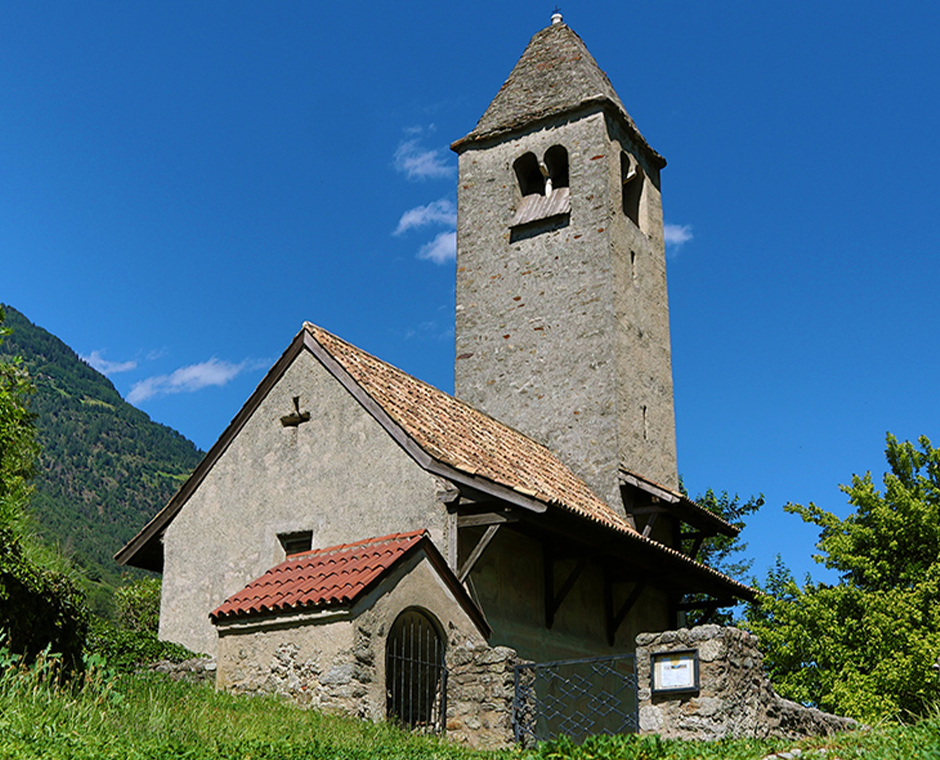
Built between 630 and 650 AD, San Procolo is one of the best-preserved early medieval churches in the entire Alpine region. Its wall paintings—including a famous fresco depicting a mysterious rider shown upside down—are among the oldest and most fascinating examples of Christian art in Tyrol.
A seemingly simple place, yet filled with sacred and symbolic meaning, where every detail reflects a deep, enduring faith passed down through generations of valley dwellers.
Archaeological Excavations and Secrets beneath the Church
Between 1985 and 1986, an important excavation campaign uncovered the remains of the original building and an old plague cemetery used during the 17th century. Even more astonishing was the discovery that the church had been built atop the ruins of a private Roman house destroyed by fire around 600 AD; archaeologists even found the charred skeleton of a victim of the tragedy.
Transformations through the Centuries
Early Middle Ages (10th–11th century)
During this period, the church underwent major architectural renewal: the apse was replaced with a trapezoidal chancel, and a triumphal arch was added. From this era also dates the famous fresco cycle, one of the most enigmatic and intriguing examples of early medieval religious art.
Late Middle Ages (12th–14th century)
The bell tower was erected, and the choir received a barrel-vaulted ceiling. The main entrance was moved, and the church passed into the hands of the Lords of Annenberg, who transformed it into their funerary chapel, commissioning new frescoes in Gothic style. Of particular visual impact is the Crucifixion painted in the apse.
The Plague Era (17th century)
In 1636, a plague epidemic struck Naturno, claiming about a quarter of the population. The church’s isolated location made it an ideal place for the burial of the victims, turning San Procolo into a symbol of both sorrow and hope for the entire community.
The San Procolo Museum
Opened in 2006, the modern underground museum opposite the church offers an immersive journey through 1,500 years of history, from Late Antiquity to the 17th century. Thanks to multimedia installations and original archaeological finds, visitors can explore the building’s evolution, the religious and daily life of the past, and the dramatic events linked to the plague.
A Place that Speaks to the Heart and Soul
Visiting San Procolo means more than admiring ancient frescoes or studying local history. It means connecting with the deep soul of a people, capable of enduring centuries of faith, tragedy, and artistic evolution, leaving extraordinary traces in South Tyrol’s cultural landscape.
An evocative, intense, and surprising experience—perfect for lovers of art, history, and spirituality, and for anyone wishing to discover the most authentic and hidden side of South Tyrol.